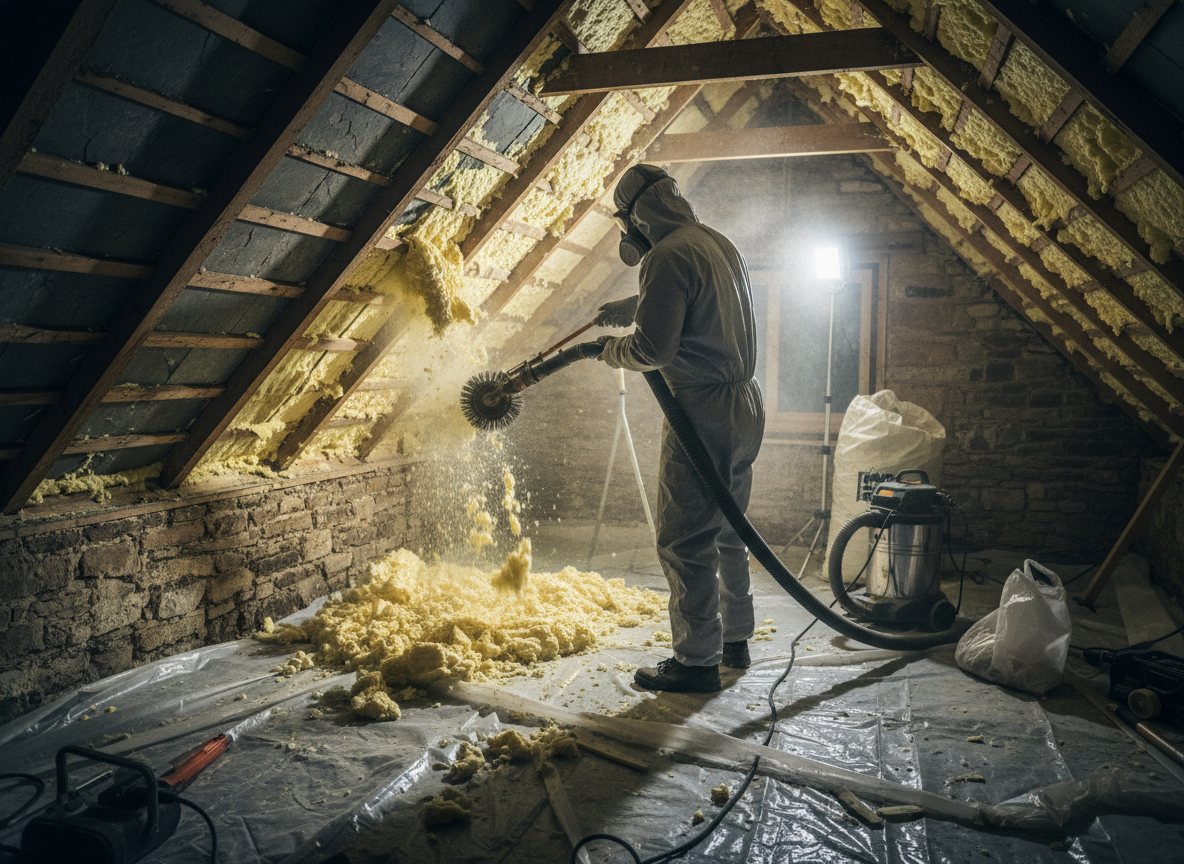
Spray foam removal in Huddersfield often involves older terraced houses from the Victorian and Edwardian eras that line streets around the town centre and in areas like Lockwood and Paddock. These properties frequently have spray foam applied over original timber joists and lathe ceilings, which traps moisture from the region's frequent Pennine rainfall and leads to hidden rot. Removal requires careful cutting and vacuum extraction to avoid damaging fragile plasterwork or disturbing asbestos-containing materials sometimes found in mid-century additions common here.
West Yorkshire's damp climate means foam applied in lofts or cavity walls can accelerate timber decay once water ingress occurs through aging slate roofs or poor guttering. Technicians must assess for condensation risks before starting, especially in properties near the canal network where ground moisture levels stay elevated. Edge cases include foam bonded to electrical cabling or pipework, which demands isolation of services first to prevent damage during stripping.
Local building practices in Huddersfield mean many roofs lack modern ventilation, so foam removal often reveals the need for ridge vents or soffit upgrades to meet current regulations on breathability. Homeowners should expect inspection of all affected timbers for structural integrity before any new insulation goes in, as partial removal can leave pockets that continue to hold moisture.
Handling Moisture in Local Stone Terraces
Huddersfield's older homes built from local stone often suffer from rising damp when spray foam blocks natural evaporation. Removal crews check floor voids and wall junctions for saturation, using moisture meters on joists before extraction to map the full extent of any decay.
Technician insight
In Huddersfield, the thing that catches most people out with spray foam insulation removal is how often it was sprayed straight onto the underside of slate roofs in 1800s terraces without any vapour barrier, so once you start pulling it the Pennine damp has already started softening the rafters from the inside.
Loft Removal in a Paddock Terrace
Owner of a stone terrace in Paddock reported persistent loft smells after winter storms. Inspection showed spray foam over saturated ceiling joists with early rot. We extracted the foam in controlled sections, treated the timber and improved airflow before leaving the space dry and ventilated.
How it works
- 1
Initial Site Survey
Assess foam location, depth, and any signs of moisture damage in the specific Huddersfield property.
- 2
Service Isolation
Disconnect electrics and plumbing where foam contacts wiring or pipes to allow safe removal.
- 3
Foam Extraction
Cut and vacuum out the foam in sections while protecting surrounding plaster and timber.
- 4
Timber Inspection
Check joists and roof structure for rot caused by trapped damp from local weather patterns.
- 5
Site Cleanup
Remove all debris and advise on ventilation improvements suited to West Yorkshire conditions.
Pricing
Costs depend on access, foam thickness and extent of any timber repairs required; upfront quotes provided after survey.