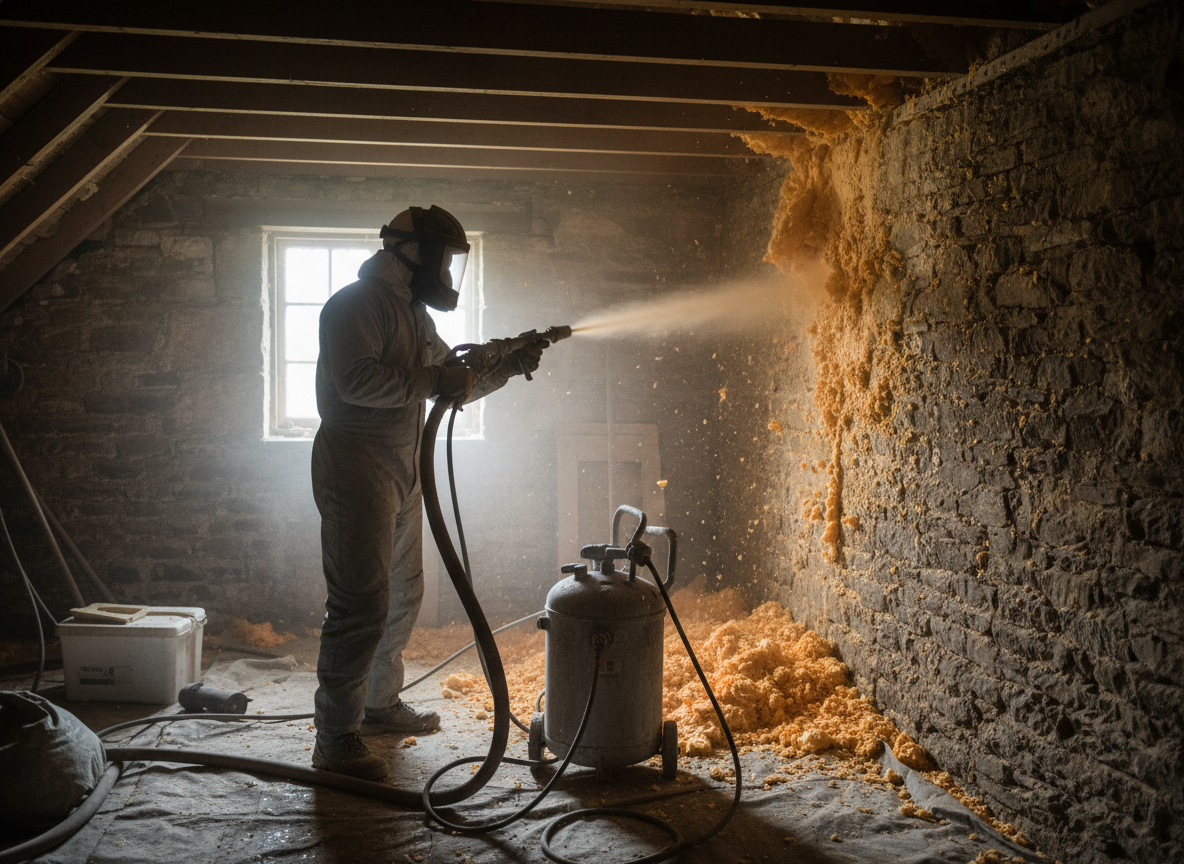
Sand blasting spray foam insulation removal requires careful control of abrasive media and pressure to strip cured polyurethane from rafters and masonry without damaging original timber or stone in Huddersfield's older terraces. Properties built before the 1960s often feature narrow roof voids and lime mortar that can crumble under excessive force, so operators adjust nozzle distance and grit type on site after testing small sections. Dust containment is critical because many Huddersfield streets sit close together, and loose particles can travel into neighbouring lofts or gardens if extraction and sheeting are not set up correctly.
Moisture trapped behind foam in West Yorkshire roofs accelerates timber decay, especially after heavy winter rainfall common around the Pennine foothills. During removal the team checks for rot in joists and ventilates the space immediately to prevent further issues before any new insulation is considered. Access through small loft hatches in terraced homes on streets like those near 28 Bath Street often means breaking the work into staged sections rather than attempting full clearance in one visit.
Local building control may require notification if the roof structure is altered during removal, particularly on listed buildings found in parts of Huddersfield town centre. The process leaves surfaces ready for inspection so homeowners can verify the original fabric remains intact before any follow-on works begin.
Technician insight
In Huddersfield, the thing that catches most people out with sand blasting spray foam insulation removal is how tightly the foam bonds to the stone walls in pre-1910 terraces around Paddock and Marsh. Once winter temperatures drop the material becomes brittle and fractures unevenly, leaving thin residue that still traps moisture against the masonry.
Paddock Terrace Loft
Foam had been pumped into a narrow roof void above a 1905 stone terrace and was holding damp against the rafters. We found widespread surface mould and soft timber ends during the initial test blast. Sand blasting at reduced pressure cleared the foam completely, followed by immediate ventilation and debris extraction. The client could then arrange a roofer to treat the exposed joists.
How it works
- 1
Site Assessment
Inspect roof void, note timber condition, and test foam adhesion in a discreet corner.
- 2
Containment Setup
Seal access points, install dust extraction, and protect neighbouring properties.
- 3
Abrasive Removal
Apply controlled sand blasting to strip foam while monitoring substrate integrity.
- 4
Clearance and Ventilation
Remove debris, clean surfaces, and improve airflow to dry any remaining moisture.
- 5
Final Inspection
Walk through with the client to confirm all foam is gone and structure is sound.
Pricing
Cost depends on roof size, foam thickness, and access difficulty in older Huddersfield properties.