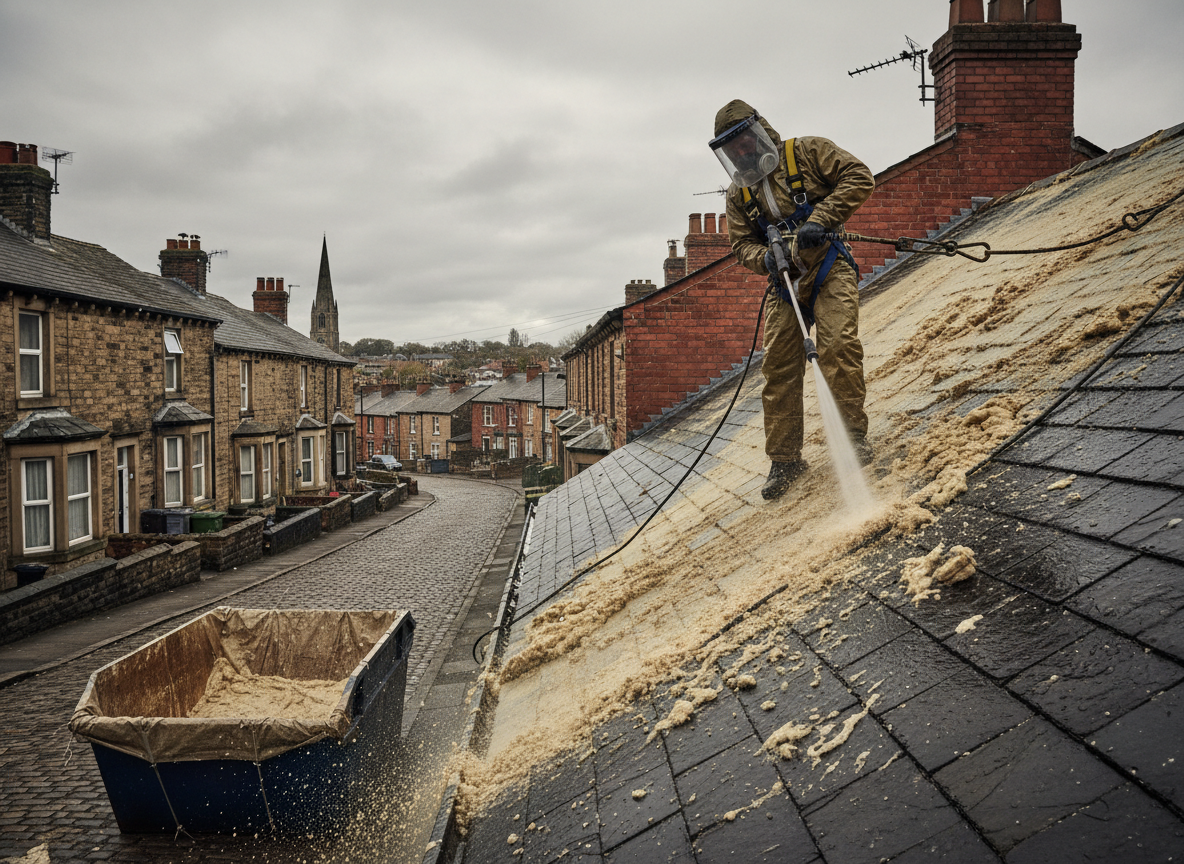
Roof spray foam removal in Huddersfield often involves older Victorian and Edwardian terraces common across the town centre and areas like Lockwood and Paddock. These properties frequently have slate roofs where foam was applied directly to the underside, bonding tightly to irregular surfaces. Removing it requires careful separation to avoid damaging the slates or dislodging insulation debris into living spaces below. The region's frequent rainfall means any remaining foam pockets can hold moisture against timber, accelerating rot if not fully cleared.
Edge cases arise with properties near the Huddersfield Narrow Canal or on sloping ground around Almondbury, where water ingress patterns differ from flatter sites. Foam installed over existing felt or boards can conceal corrosion on metal fixings or hidden damp in stone walls. Technicians must account for limited loft access in narrow terraced houses and use containment measures to prevent particles drifting through shared chimney stacks or party walls. Post-removal inspection often reveals the need for additional ventilation upgrades to meet current building standards in West Yorkshire.
The process demands attention to how Huddersfield's cool, damp winters affect foam adhesion and curing. Older applications may have been done without proper vapour barriers, leading to condensation issues once removed. Work must proceed methodically to separate the material without compromising roof structure, followed by thorough cleaning of rafters and boarding before any new insulation is considered.
Technician insight
In Huddersfield, the thing that catches most people out with roof spray foam removal is how the damp West Yorkshire climate lets foam trap moisture against the stone and timber in Victorian terraces, especially around shared chimney breasts where rot spreads unseen until removal starts.
Terrace Loft Near Lockwood
Homeowner noticed ceiling staining after heavy rain. We found spray foam had bridged a small slate crack and held water against the rafters. Removed the foam layer completely, cleared residue from the timber, and confirmed no further hidden damp before handover.
How it works
- 1
Initial Assessment
Inspect the roof void, identify foam coverage and adhesion points, and note any signs of moisture or structural concerns in Huddersfield properties.
- 2
Containment Setup
Seal off the work area to prevent debris spread through lofts and shared walls typical in local terraces.
- 3
Foam Extraction
Mechanically separate and remove the spray foam layer while protecting slate and timber elements.
- 4
Cleanup and Verification
Clear remaining residue, check for hidden damp, and confirm the space is ready for follow-up works.
Pricing
Cost varies with roof size, foam depth, and access difficulty in older Huddersfield buildings; site visit required for accurate assessment.