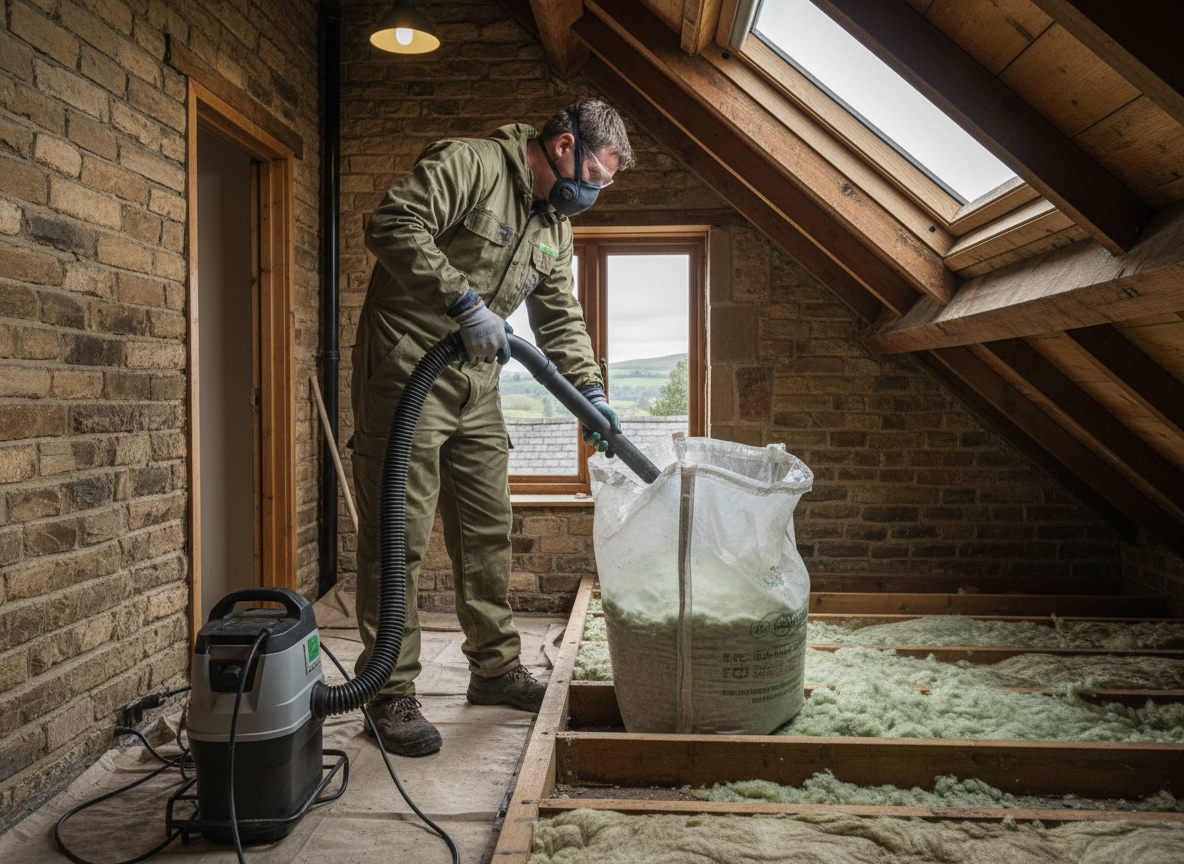
Huddersfield's older terraced and stone-built homes from the Victorian and Edwardian eras often received spray foam insulation in lofts and cavities during later energy upgrades. Over time this material can trap moisture against the original stone or brickwork, especially during the region's frequent wet winters and high rainfall. Environmentally friendly removal starts with full containment using negative air pressure and HEPA filtration to prevent loose particles escaping into living spaces or the surrounding streets.
The process requires careful separation of the foam from timber joists and roof structures without causing further damage to the building fabric. In many Huddersfield properties the foam was applied over existing mineral wool or between rafters, creating layered waste that must be segregated on site. Responsible disposal routes the material to licensed recycling facilities rather than landfill, which is particularly important given the limited waste handling options in the Kirklees area.
Access challenges are common in narrow ginnels and steep roof pitches typical of properties near the town centre and in areas such as Marsh and Paddock. Technicians must work around shared chimney stacks and party walls while maintaining full documentation of waste transfer for the householder. Post-removal ventilation checks ensure the loft returns to a breathable state suited to the damp West Yorkshire climate.
Technician insight
In Huddersfield, the thing that catches most people out with environmentally friendly insulation removal is how the damp stone terraces around the town centre hold moisture behind the foam. Once winter temperatures drop and rain sets in, that trapped water turns the removal job into a careful drying and ventilation exercise rather than a straight extraction.
1920s Terrace Loft in Marsh
Homeowner reported musty smells and poor loft ventilation in a stone terrace. Inspection found spray foam applied directly over original lath and plaster, trapping condensation against the roof. We contained the space, extracted the foam in sections, and arranged licensed recycling. The loft was left clear with improved airflow and no further moisture issues.
How it works
- 1
Initial Assessment
Inspect the property to identify foam type, depth, and any moisture damage in the roof structure.
- 2
Site Containment
Install negative pressure enclosures and dust extraction to protect the home and neighbourhood.
- 3
Controlled Extraction
Remove foam in sections using low-impact tools that avoid structural damage to joists and tiles.
- 4
Responsible Disposal
Segregate waste on site and transport to licensed facilities for recycling or approved disposal.
- 5
Final Verification
Check ventilation, clear debris, and provide the homeowner with waste transfer documentation.
Pricing
Pricing depends on property access, foam depth and volume. Quotes are provided after inspection.