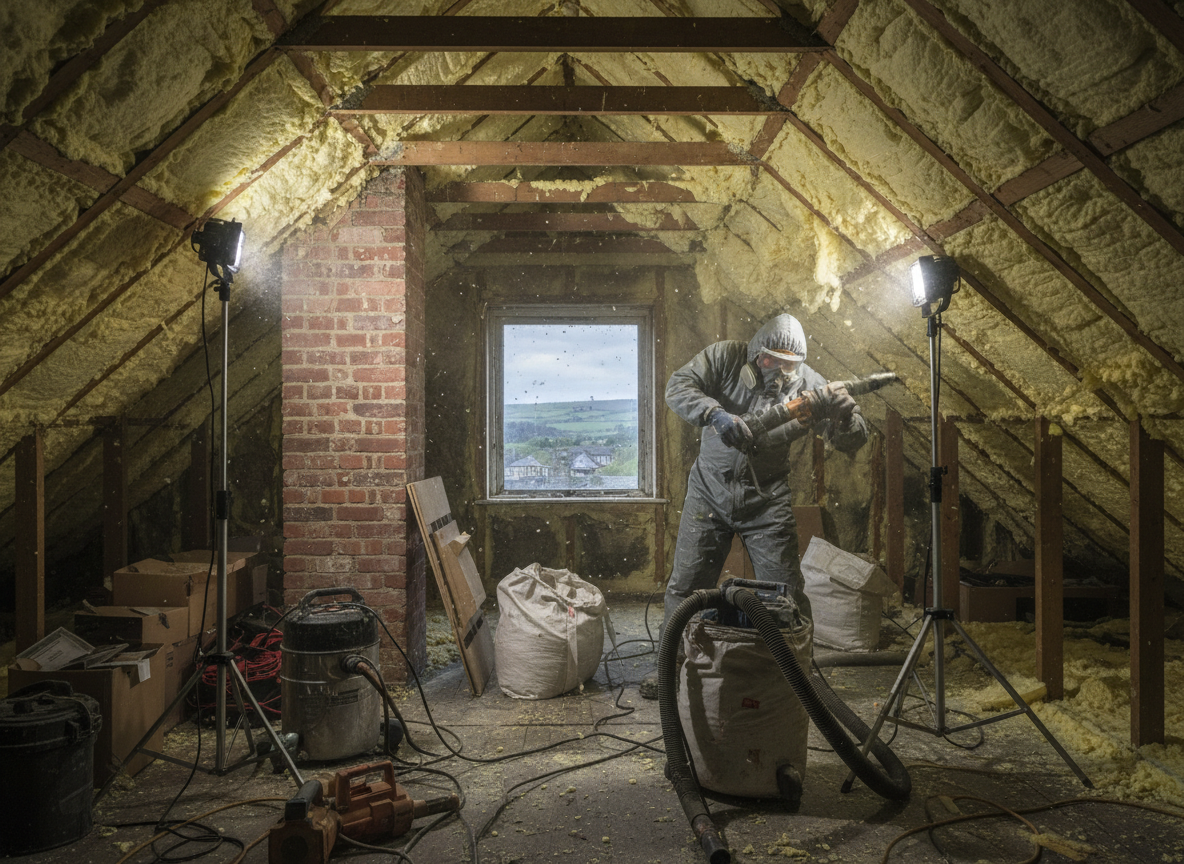
Lindley’s stone terraces and larger Edwardian homes often hold spray foam that traps moisture against the original slate roofs and solid walls. Removing it requires working around narrow ginnels, shared chimney stacks and small loft hatches common on streets like Acre Street and Daisy Lea Lane. Our team arrives with dust extraction and sheeting to keep the job contained inside these compact properties.
West Yorkshire’s frequent Pennine rain and driving winds push water under ridge tiles and into eaves where foam was once applied. In Lindley we see repeated cases of hidden damp along the rear elevations facing Lindley Moor. Extraction here includes checking every rafter foot and ventilating the roof space properly before we leave.
Access on terraced rows means equipment must be carried through front doors and up steep stairs rather than using rear lanes blocked by gardens. We schedule around school runs near Lindley Junior School and keep disruption low for neighbours on New Hey Road.
Around Lindley
We regularly work near:
- 📍Lindley Park
- 📍St Stephen's Church
- 📍Lindley Junior School
- 📍Lindley Moor Road
- 📍Acre Street
Spray Foam Removal in Lindley — Local Notes
- •Many Lindley properties are mid-19th-century stone terraces with narrow loft hatches and shared party walls that limit how much material can be removed at once.
- •High rainfall and exposure to winds off Lindley Moor mean any remaining foam residue must be fully cleared to prevent future condensation on the cold stone.
- •Rear yards are often stepped or terraced, so all waste is bagged and carried out through the house to avoid blocking ginnels used by neighbours.
- •Older slate roofs in the area can be brittle; our process includes temporary ridge protection during extraction on streets like Lidget Street.